
Sprinkler Valve Leaking: How to Find the Cause and Fix It
Where the water shows up tells you why a sprinkler valve is leaking. How to stop it, tell drainage from a real leak, and clean or replace the parts.
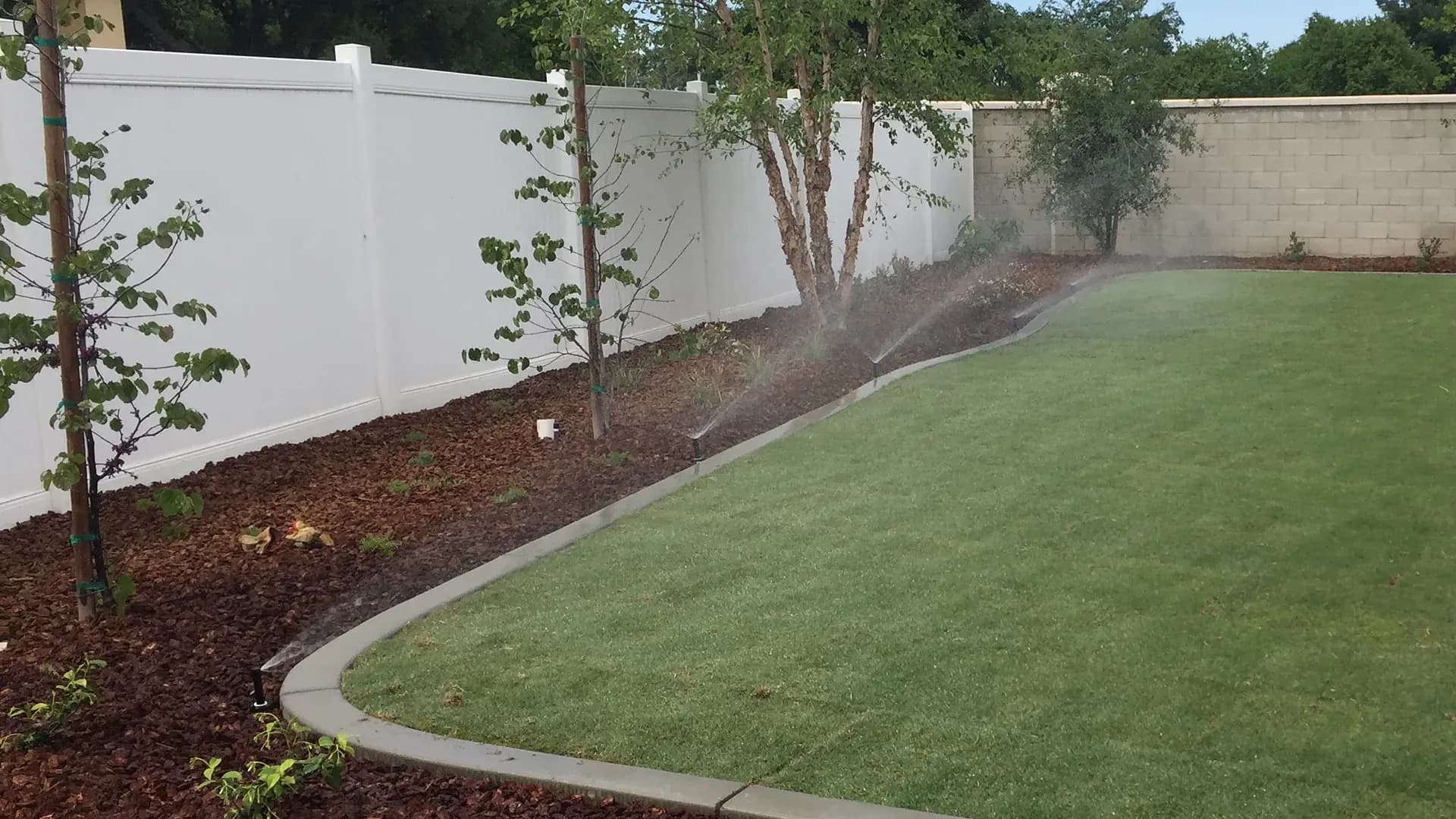
If you have a sprinkler valve leaking, it usually comes down to one of four things: dirt stuck under the diaphragm, a worn or torn diaphragm, a solenoid that isn't sealing, or a loose part on the valve itself. Where the water shows up tells you which one. One kind of leak is no leak at all: after a zone shuts off, the water left in the pipe drains out of the lowest sprinkler head, and that is normal.
Most of these causes are fixed with a cleaning, a new diaphragm or a new solenoid. The valve itself gets replaced when it is cracked, when the seat inside it is damaged, or when the seam between its lid and body still leaks after the screws are tightened. The steps below follow the valve makers' own guides.
First, stop the water
If a zone won't shut off, stop the water before you look for the cause:
- Set the controller to off.
- If the water keeps running, unplug the controller. If that stops it, the problem is most likely the controller, not the valve.
- If the valve has a flow control knob, turn it to its lowest setting.
- If water still runs, close the main shutoff valve for the sprinkler system.
Sprinkler valve leaking: read where the water shows up
Each spot points to a different cause, so look before you take anything apart.
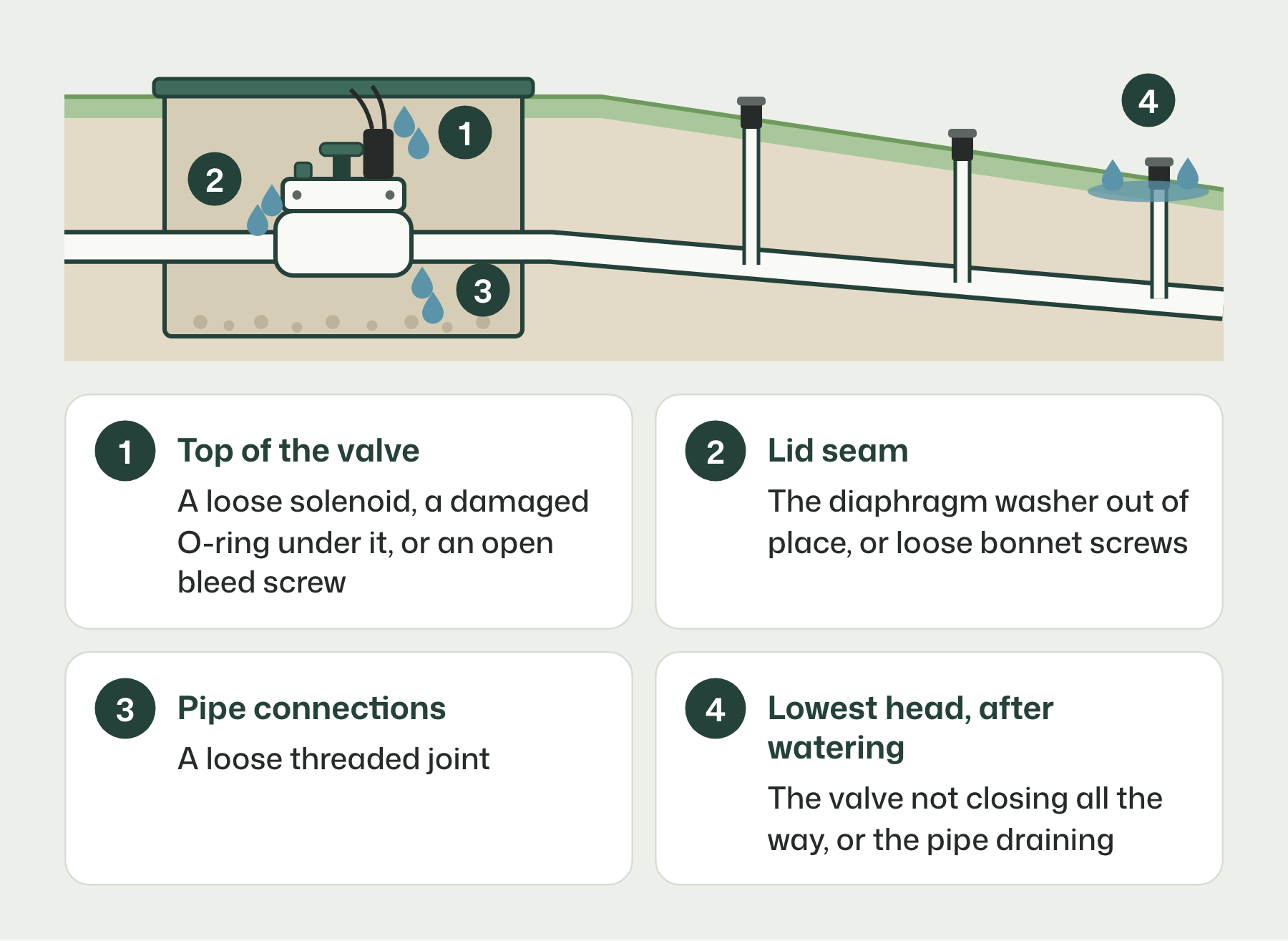
| Where the water shows | What it usually means | What to do |
|---|---|---|
| Around the pipe connections | A loose threaded joint | Tighten it, with PTFE thread tape only |
| Along the seam between the lid and the body | The diaphragm washer is out of place, or the screws are loose | Seat the washer and tighten the screws |
| From the top of the valve | A solenoid not screwed all the way in, a damaged O-ring under it, or an open bleed screw | Turn the solenoid and the bleed screw clockwise, and check the O-ring |
| At the lowest head after the zone shuts off | The valve isn't closing all the way, or the pipe is draining | Skip that zone for two days, then check the head |
Along the seam between the lid and the body
The lid of a valve is called the bonnet. A leak along that seam usually means the diaphragm washer is out of place or the bonnet screws are loose. Check that the washer sits right and tighten the screws. If it still leaks, the valve may need replacing. Check the body and the bonnet for cracks while you are there.
From the top of the valve
On most valves the solenoid, the black cylinder with wires, screws into the top. It has to be turned all the way clockwise. A solenoid left partly open puts the valve in manual mode, and a twisted or damaged O-ring under it leaks as well. Many valves also have a bleed screw on top that sprays water when it is open, and it closes clockwise.
An anti-siphon valve, the kind that sits above ground with a backflow device built in, has to stand at least 6 inches above the highest sprinkler head on its line for that device to work properly. One that sits lower is worth a look.
Is the sprinkler valve leaking, or is the pipe draining?
Some water draining out of the lowest head on a line is normal after a zone shuts off. The longer the pipe, and the lower it runs, the longer it drains. To tell drainage from a leak, skip watering that zone for two days, then look at the lowest head.
- Still very wet, or dripping: the valve isn't closing all the way. The usual causes are dirt or damage on the diaphragm or on the seat it closes against, a solenoid that isn't sealing, or a valve left partly in manual mode.
- Dried out somewhat: it is the pipe draining. A sprinkler head with a built-in check valve stops it.
How to clean or replace the diaphragm
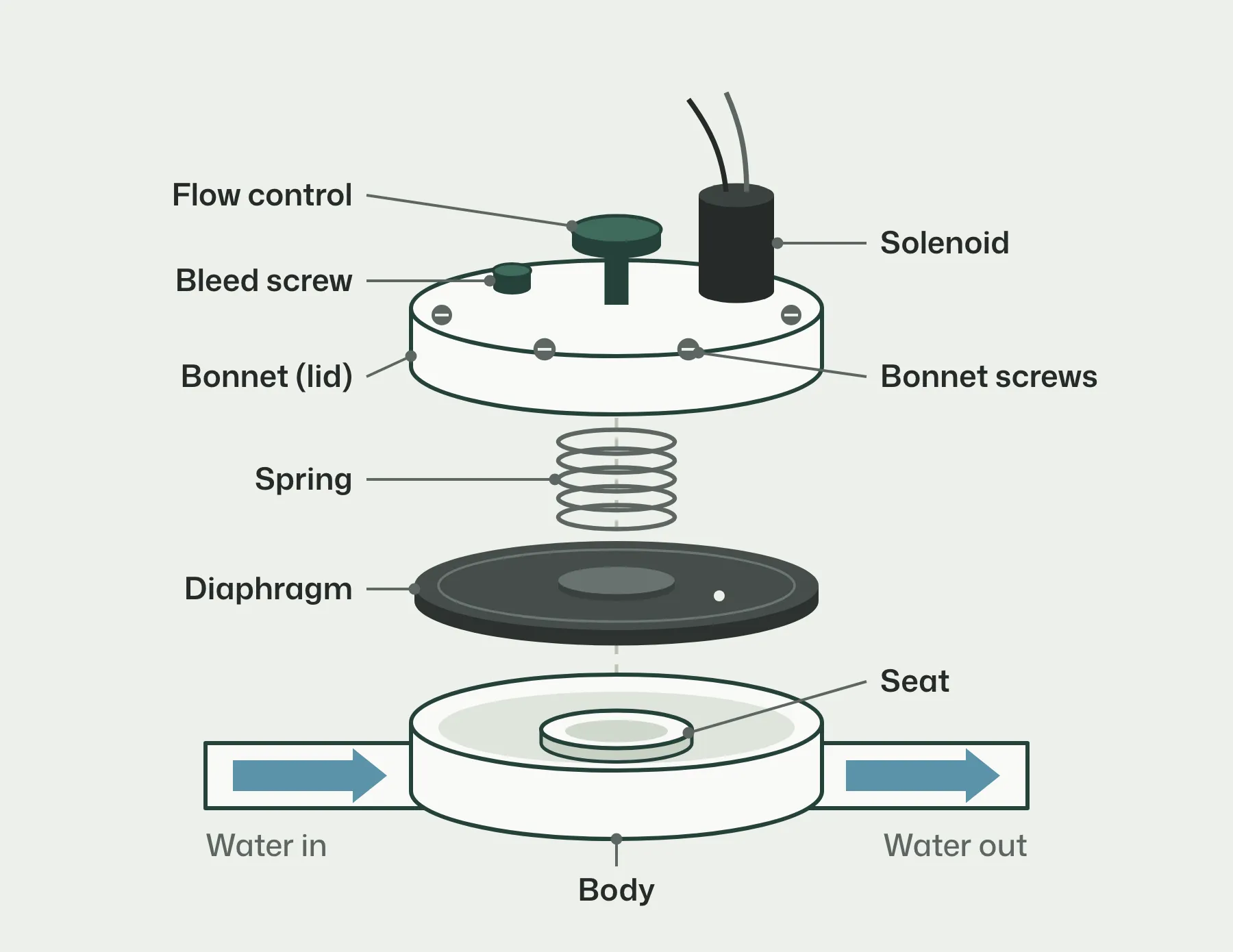
Before taking a valve apart, try its flush mode. Turn the bleed screw counterclockwise one turn only, let it run for a minute, then turn it clockwise to close. That clears loose debris.
If the leak is still there, take the valve apart. Most diaphragm valves are built much the same way, but check your valve's manual.
- Shut off the water at the main shutoff valve.
- Remove the bonnet screws, or unscrew the jar-top lid. On some valves the bleed screw or the flow control knob comes off first.
- Lift off the bonnet. Take out the spring, the diaphragm and any rubber gasket or filter, and look for wear, a tear, or a clogged small hole in the diaphragm.
- Check the valve body for dirt on the seat where the diaphragm closes, and the bonnet for dirt in the small port near the solenoid.
- Rinse the parts. A piece of wire gently clears a clogged port.
- Fit a new diaphragm if the old one is worn or torn, put the spring back, and line up the holes.
- Press the bonnet back on and tighten the screws, or screw the lid back on. Then turn the water on and check the seam for leaks.
How to check the solenoid
- Turn the valve off and make sure no power is going to it.
- Disconnect the controller wires and unscrew the solenoid.
- Rinse it, and check the small port it sits over for debris.
- Look at the O-ring for twists or damage.
- Push a piece of wire into the small hole at the bottom to see whether the plunger moves up and down freely. If it doesn't, replace the solenoid with the part made for your valve.
To run a valve by hand, turn the solenoid a quarter turn counterclockwise and no further. Past that, it can come loose and release water under pressure.
When a leaking valve needs a repair visit
Call when the valve body or bonnet is cracked, when the seat inside is pitted or damaged (that can mean a new valve body), when you can't tell which valve in a group is leaking, or when water pools in the yard between the valve and the heads. Select Landscape repairs and replaces valves as part of sprinkler repair in Bakersfield.
A leak that sends water into the street also breaks the City of Bakersfield's runoff rule for its water customers, and the City asks that a leak be fixed within five working days of it pointing one out. The Bakersfield watering schedule has the rest of the rules.
Key takeaways
- Where the water shows tells you the cause: the pipe connections, the lid seam, the top of the valve or the lowest head.
- A wet lowest head can be normal drainage. Skip that zone for two days: if the ground dries out somewhat, the pipe is draining; if it stays very wet, the valve isn't closing.
- Try the flush mode before you take a valve apart: the bleed screw one turn counterclockwise, for one minute.
- Most leaks are fixed with a cleaning, a new diaphragm or a new solenoid.
- A cracked body or bonnet, or a damaged seat, means new parts or a new valve.
If the valve needs more than a cleaning, ask us for an estimate.
Frequently asked questions
How do I know if my sprinkler valve is leaking?
Look in the valve box first. Water around the pipe connections, along the seam between the lid and the body, or at the top of the valve means the valve is leaking. A zone that keeps running after the controller is off is another sign. A wet lowest head can be normal drainage, so skip that zone for two days: if it is still very wet, the valve isn't closing all the way.
Why are my sprinklers leaking when they are not running?
Either the valve isn't closing all the way, or the pipe is draining out of the lowest head after the zone shuts off. Skip watering that zone for two days. If the lowest head is still very wet or dripping, the valve is leaking; if the ground has dried out somewhat, it is drainage, which a head with a check valve stops.
Why is water coming out of my irrigation valve?
Water at the valve itself comes from a loose pipe connection, a bonnet that isn't sealed against the body, a cracked body or bonnet, a twisted or damaged solenoid O-ring, or a bleed screw left open.
How do I tell which sprinkler valve is leaking when several sit together?
An automotive stethoscope helps: listen at each valve for the one that is passing water.
Related services
Keep reading
Bakersfield Watering Schedule: When and How Long to Water
Which days your address can water, the hours to avoid, and how many minutes a week your lawn needs, month by month.
Best Grass for Bakersfield, CA: Bermuda, Fescue or Bluegrass
Bermudagrass, tall fescue or Kentucky bluegrass: which suits a Bakersfield lawn, what each needs in water and shade, and when to plant it.