
Pavers vs Concrete for a Bakersfield Patio or Driveway
Concrete usually costs less to put in; a damaged paver comes out on its own. What is under each, why slabs crack, what Bakersfield heat does to a pour, and which fits your yard.
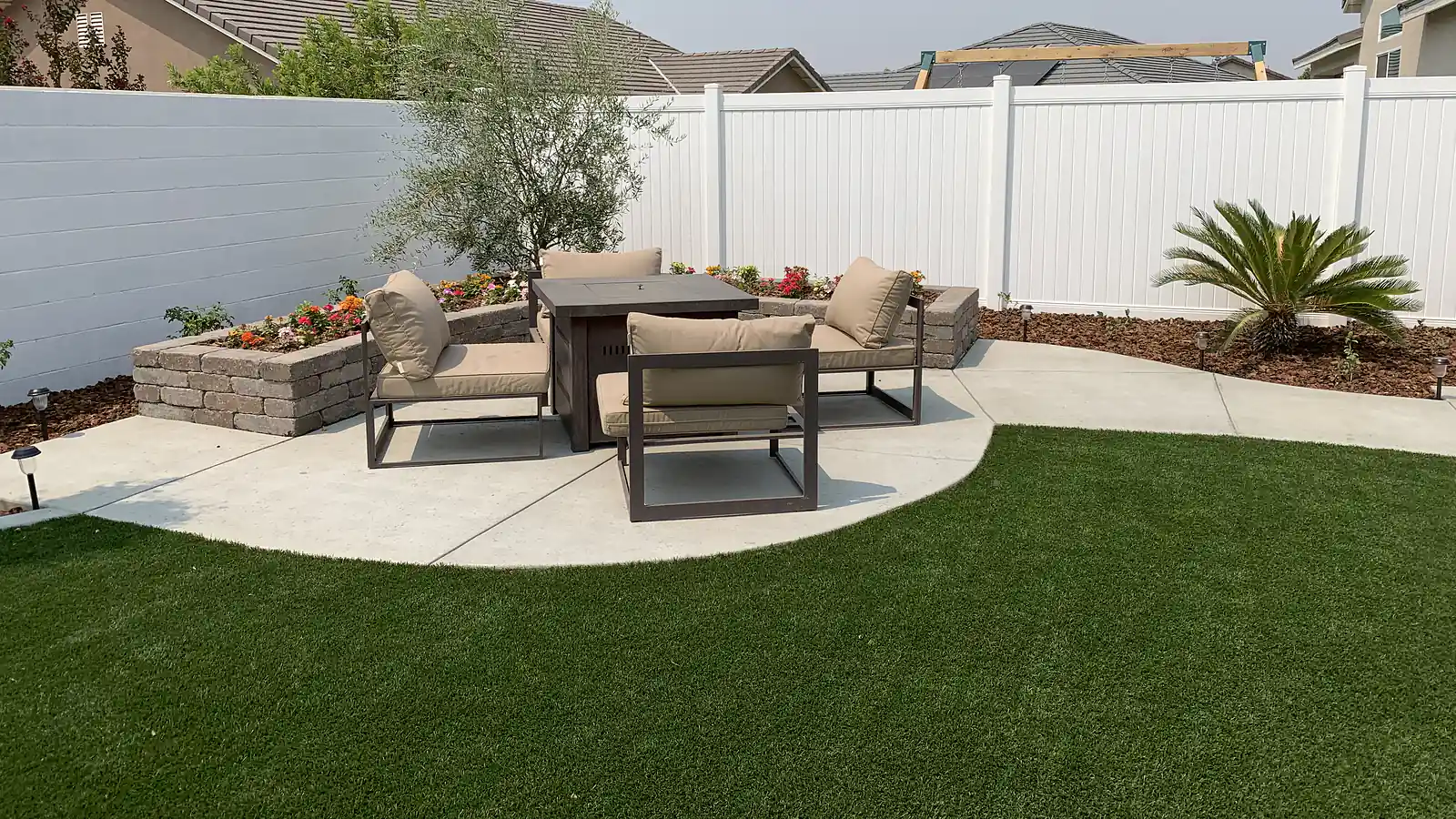
Pavers vs concrete comes down to two things: what you pay up front, and what a repair looks like later. Poured concrete usually costs less to put in, but every slab shrinks as it dries and cracks somewhere, so it gets control joints that decide where. Pavers cost more. They sit on sand and compacted gravel, the joints between them take small movement without cracking, and a damaged paver can be swapped out on its own. Even the paver makers' trade group agrees that poured concrete often costs less at the start.
Pavers vs concrete guides often bring up freeze and thaw damage, which matters in cold places. It barely applies here. NOAA's 1991 to 2020 normals for the Bakersfield airport show about 10 nights a year at or below freezing, and not one day that stays below it. Heat is what changes the job in Bakersfield. Select Landscape installs both. Concrete is the more popular choice here, mostly because of cost, and it's what we suggest for most driveways. On a patio the call is closer.
Pavers vs concrete at a glance
| Feature | Pavers | Poured concrete |
|---|---|---|
| What it is | Separate units on sand and compacted gravel, held in by an edge restraint | One slab poured in place, cut into sections by control joints |
| Strength of the material | 8,000 psi or more, on average | 3,500 to 4,000 psi for an outdoor slab |
| Cracking | The joints take small settling without cracking | Shrinks as it dries; the joints decide where it cracks |
| Repairs | Lift out the damaged pavers and replace them | Patch the crack, or cut out and replace a section |
| Upkeep | Top up the joint sand as needed | Reseal stamped concrete every few years |
| Summer install | Made in a factory, so nothing cures on site | Poured early and kept damp while it cures |
| Cost to put in | Higher | Lower, for plain concrete |
What is under pavers and concrete
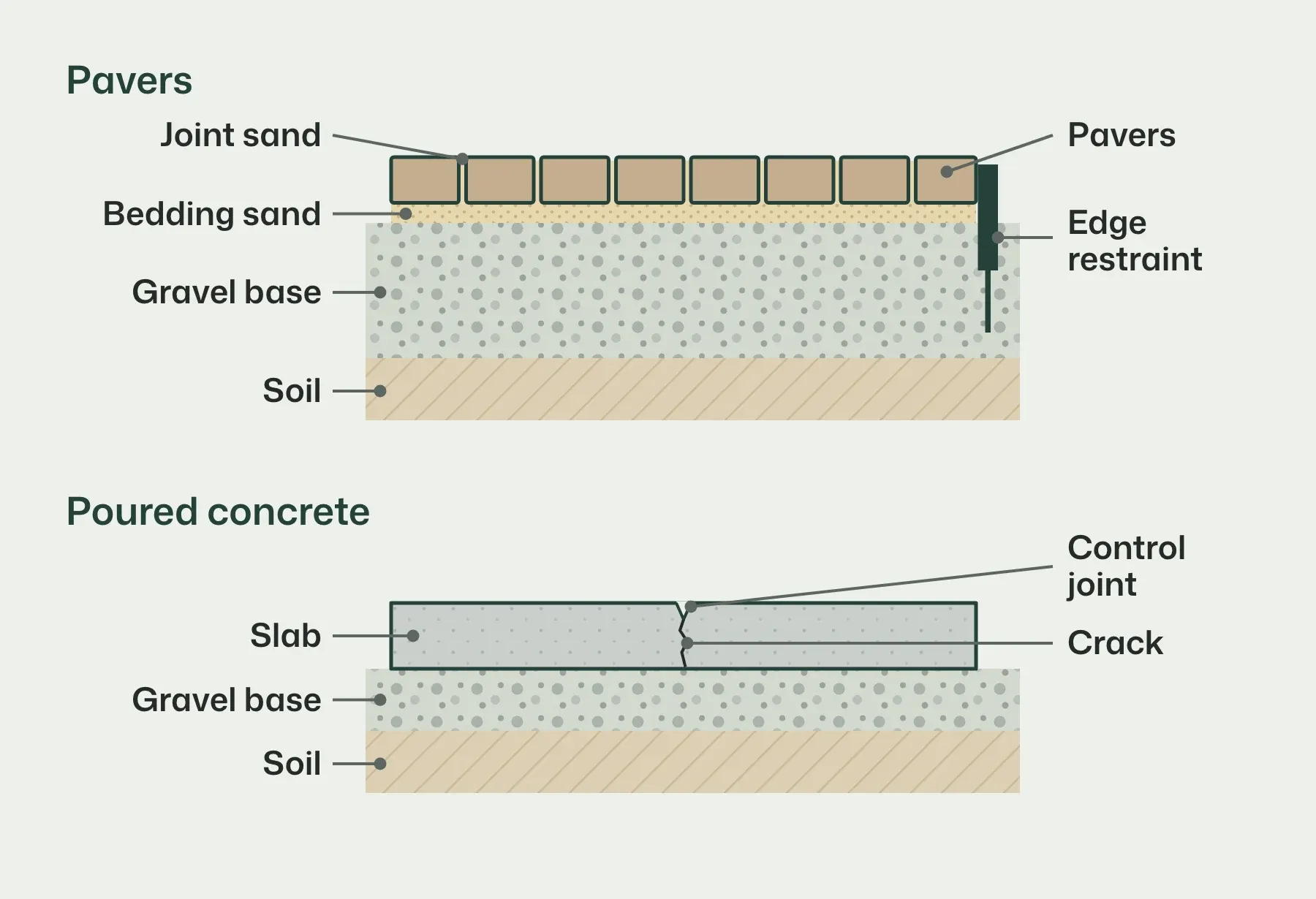
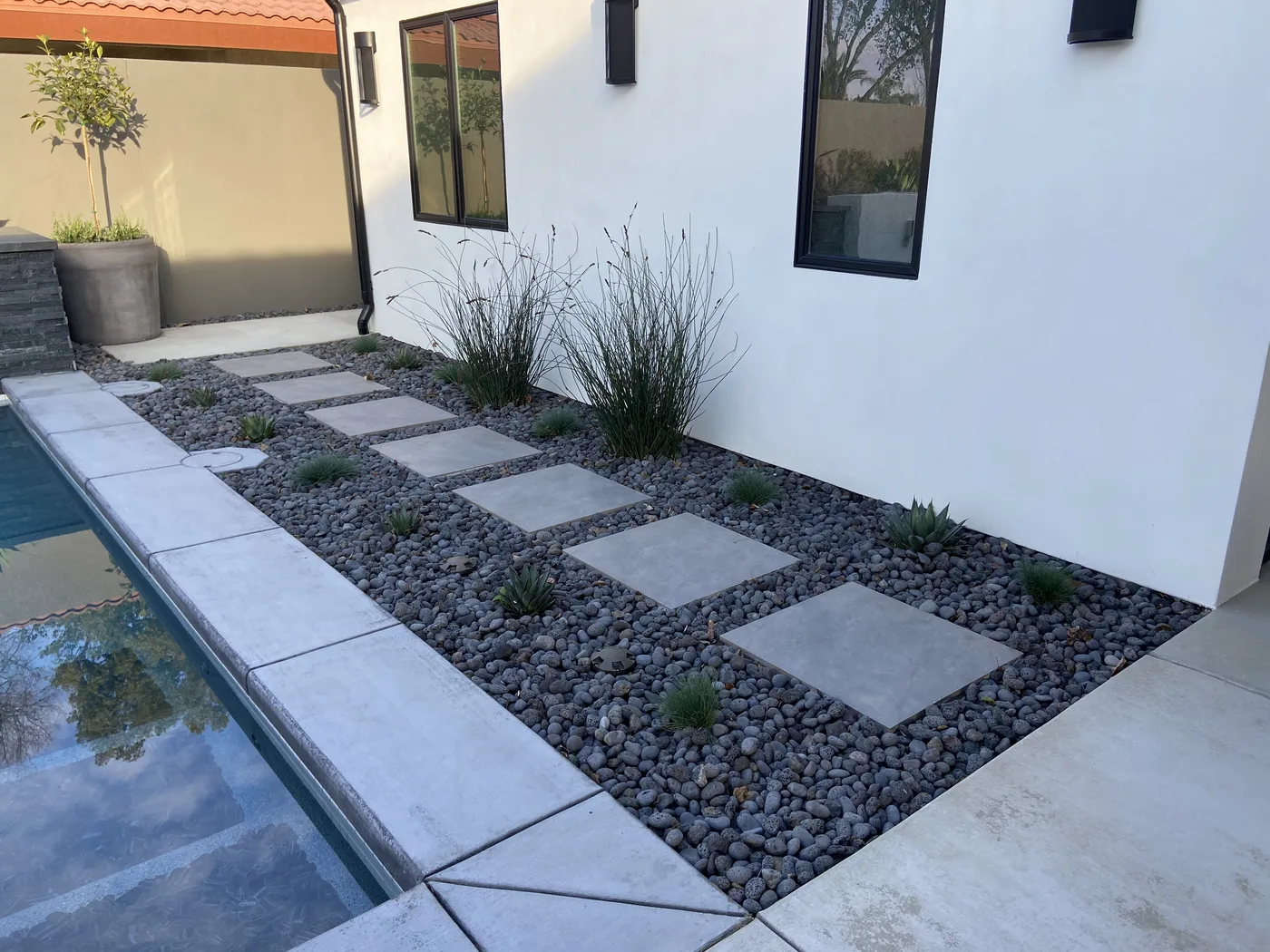
A paver patio is built in layers. The paver industry's construction guide calls for at least 4 inches of compacted gravel base under a patio or walkway on well drained soil, and at least 6 inches under a home driveway. About an inch of bedding sand is screeded flat on top. The pavers go down on the sand, an edge restraint holds the outer row, and dry sand is swept into the joints before the surface is compacted again so the units lock together.
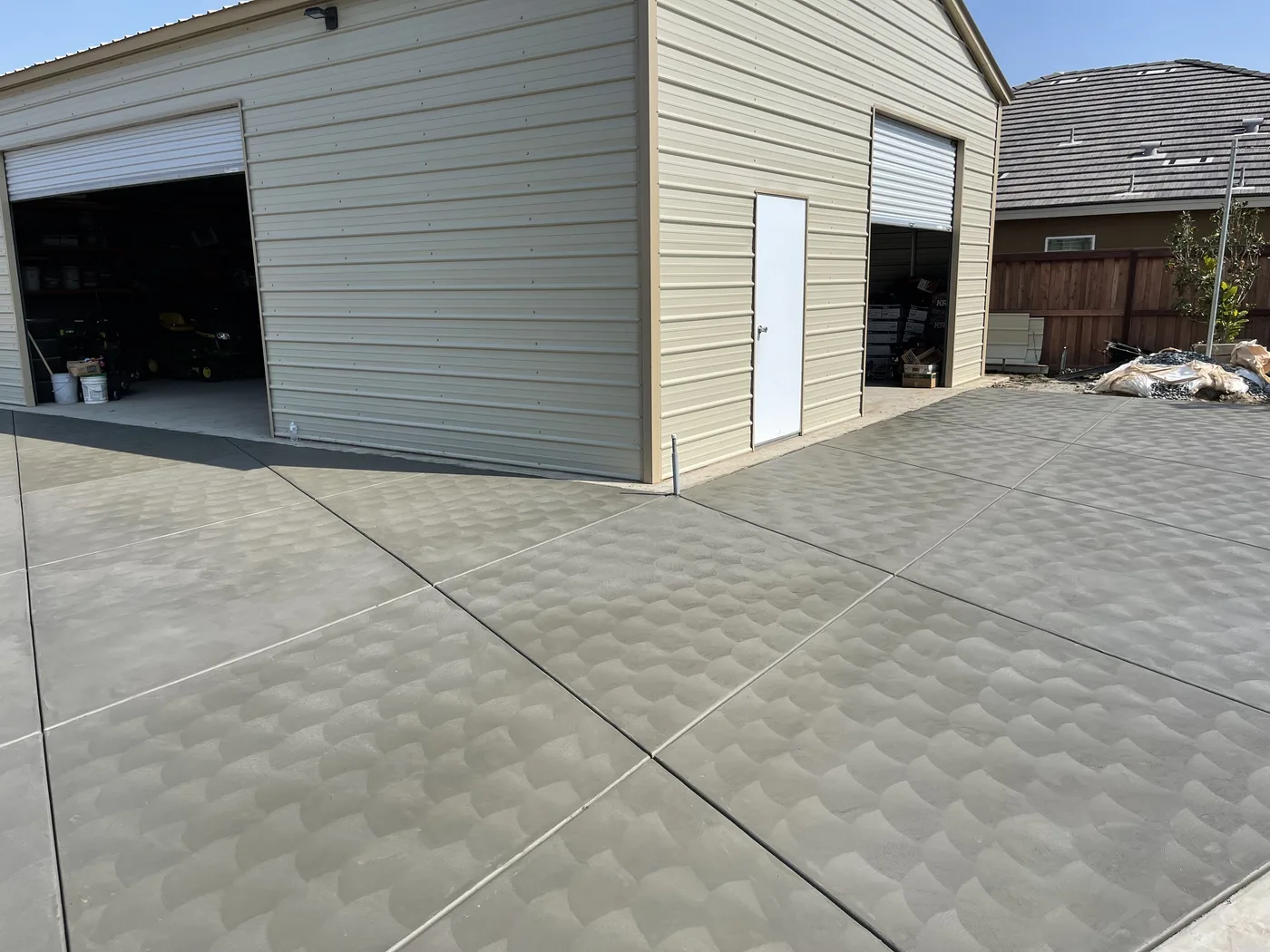
A concrete slab is one piece. It is finished while it is still wet and cut with control joints, shallow grooves that give it a straight line to crack along. For a 4 inch slab, the concrete industry's guidance puts those joints about 10 feet apart, and no more than 15.
Plenty of people call a slab like that cement. Cement is only one ingredient, usually 10 to 15 percent of the mix, according to the cement industry's association. Mixed with water, it binds sand and gravel into a rock-like mass, and that mass is concrete.
Which one cracks, pavers or concrete?
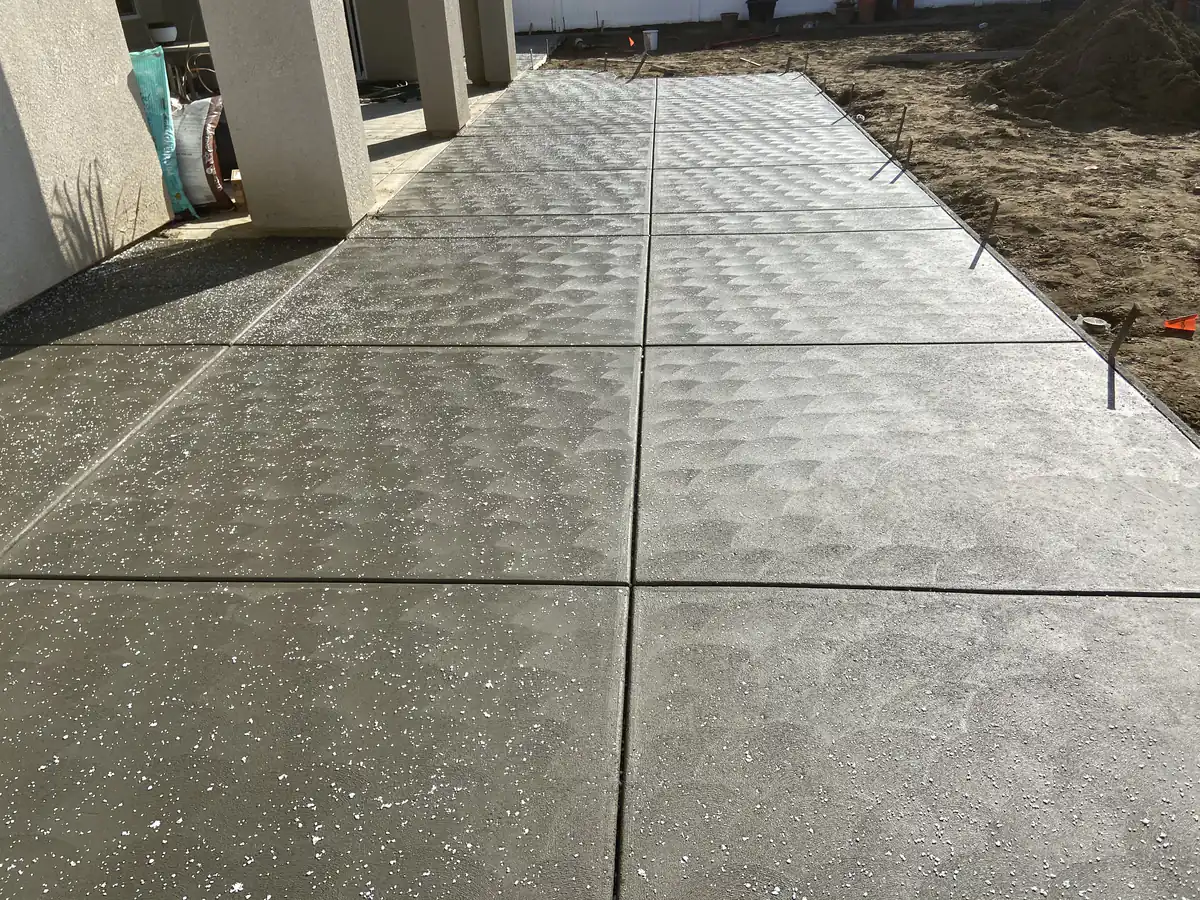
All concrete shrinks as it dries, and the concrete industry says outright that a completely crack-free slab isn't possible. Some cracks show up early. As the slab keeps drying, new ones can form and old ones can widen. Control joints don't stop that. They give it a planned place to happen, so a crack runs down a groove instead of across a panel.
Pavers take movement differently. The sand joints let the surface ride out minor settling in the base or the soil without cracking. A single paver can still crack or stain, and then it comes out and a new one goes in. The same goes for a drain, a sprinkler line, electrical conduit or a plumbing line under a patio: a section of pavers comes up, the repair gets made, and the same pavers go back down. A slab gets patched, or the damaged section is cut out and poured again, and new concrete rarely matches the old exactly.
Can you pour concrete in Bakersfield heat?
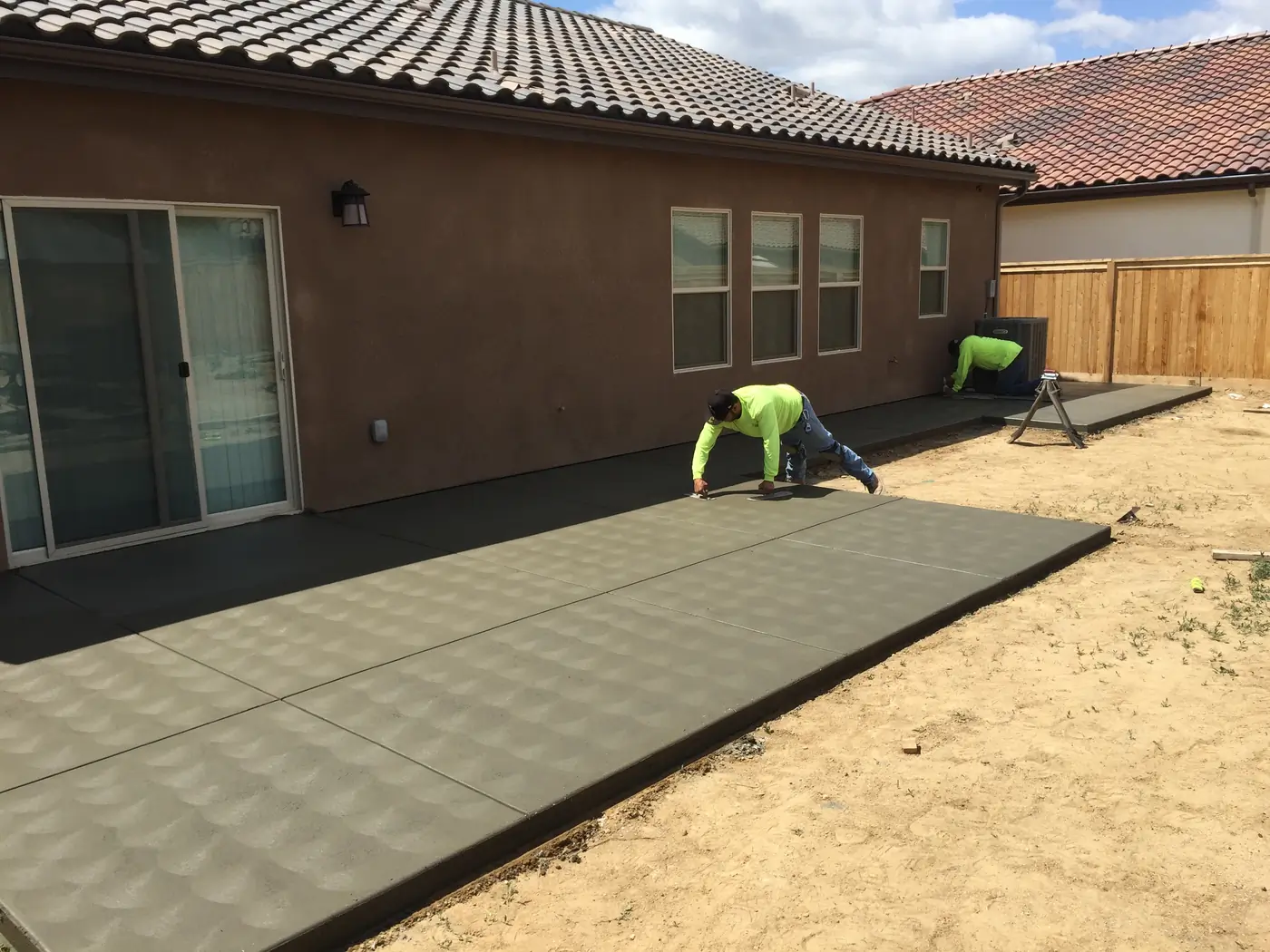
Yes, but the heat changes how it's done. Bakersfield's normal July high is 98 degrees, according to the National Weather Service, and NOAA's normals count more than a month of days a year at 100 or more. Heat speeds up fresh concrete. It sets faster, so the finishing has to move faster. When the surface dries faster than water inside the slab can rise to replace it, fine cracks open while the concrete is still soft. These plastic shrinkage cracks rarely weaken a patio or a driveway, but they show.
The concrete industry's hot weather guidance covers this. When the air is dry and windy, it calls for windbreaks, shade or a fine mist, then at least 3 days of curing under wet burlap and plastic or a curing compound. Concrete cured hot in its first days also ends up weaker later than the same mix cured near 70 degrees. That is why summer pours here start early in the morning and the slab is kept damp while it cures.
Pavers skip this part. They are made and begin curing in a factory, so there is no wet slab to protect from the sun.
Do pavers get hotter than concrete?
Not as a rule. Color matters more than the material. Any paving gets hot in a Bakersfield August. The EPA puts the solar reflectance of new gray concrete at about 40 percent, falling to about 25 percent after five years as foot traffic and dirt darken it. The less sun a surface reflects, the more it soaks up, so lighter pavers and lighter concrete both run cooler than dark ones.
Stamped concrete vs pavers
Stamped concrete is a poured slab pressed with a pattern while it is wet, so it can look like stone, brick or wood. It is still a slab, though. It gets control joints and can crack like any other, and both run through the pattern.
Sealing is the other difference. The Portland Cement Association says most concrete doesn't need a sealer, but sealers are commonly used on stamped concrete, where they bring out the look and make the surface easier to clean. Sealer makers say to reseal every two to three years, or as the sealer wears. We go by how the surface looks instead of a calendar. A dull finish is the sign, and coats stacked up year after year can turn cloudy or peel.
Pavers get their pattern from the units themselves, and they can be sealed too. In the paver industry's guidance, a sealer holds the joint sand in place, can stop seeds from sprouting in the joints and keeps ants out.
Upkeep from year to year
With pavers, the joints are the work. Wind, runoff and heavy cleaning can carry some joint sand away, and the paver industry says to top it up with dry sand once it has dropped about half an inch. Polymeric sand works when a joint is filled the first time, but it is not recommended for topping up. The industry also notes that joint sand stabilizers have held up well in windy desert climates.
Plain concrete needs little beyond cleaning. Stamped concrete adds the resealing, and a crack gets patched or the section replaced.
Which one fits your project
For a patio or a walkway, both work. Pavers make sense when you want the pattern built into the surface, or when pipes or sprinkler lines run underneath that may need reaching one day. Plain concrete makes sense when the lowest cost to put in matters most, especially on a big area. Stamped concrete puts a pattern on a single slab, with the joints and the sealer that come with it. If you want a more custom outdoor area and have room in the budget, pavers are one of our favorite choices for a patio. If you want to stay within a set budget, stamped or colored concrete is a good option.
For most Bakersfield driveways, we suggest concrete. It is strong, easy to keep up and usually the better value over a large area, and color, a stamped pattern, a decorative border or a custom joint pattern can dress it up without the cost of a full paver driveway. Pavers are an excellent choice if you have the budget and want a custom look. They need the thicker base, at least 6 inches of compacted gravel, and a paver made for vehicle weight.
On cost, concrete wins at the start. The case for pavers is the long run, since a repair is a few pavers rather than a section of slab. What either one costs in your yard depends on its size, the base it needs and the finish you pick, and that is what a written quote is for. See pavers in Bakersfield and concrete patios, driveways and walkways for how we build each one.
Key takeaways
- We suggest concrete for most Bakersfield driveways. On a patio, your budget and the look you want decide it.
- Plain poured concrete usually costs less to put in. Pavers cost more, and a repair is a few pavers instead of a section of slab.
- Every slab shrinks and cracks somewhere, and control joints decide where. The sand joints between pavers take small settling without cracking.
- Pavers need at least 4 inches of compacted gravel under a patio and 6 under a driveway, plus bedding sand and an edge restraint.
- In Bakersfield, heat matters more than frost. Summer pours start early, and the slab is kept damp while it cures.
- Stamped concrete puts a pattern on a slab. It is usually sealed, and sealer makers say to reseal every two to three years.
If you're still weighing the two, ask us for a free estimate.
Frequently asked questions
Are pavers cheaper than concrete?
No. Poured concrete usually costs less to put in. Even the paver makers' trade group says it often costs less at the start. Pavers take more steps: a compacted gravel base, a layer of bedding sand, an edge restraint to hold them in, and sand swept into the joints. The extra buys an easier repair. A damaged paver comes out on its own, while new concrete rarely matches the original perfectly.
Are pavers stronger than concrete?
The material is. The paver standard, ASTM C936, calls for an average compressive strength of at least 8,000 psi (pounds per square inch). The concrete industry recommends 3,500 to 4,000 psi for an outdoor slab, and 3,500 where the slab stays dry and never gets deicing salt, which describes Bakersfield. A paver surface is only as good as its base, though: on a thin or loose base, even strong pavers sink and shift.
Pavers vs concrete: which is better for a driveway?
For most Bakersfield driveways we suggest concrete. It costs less to put in and gives the best value over a large area, and its control joints decide where it cracks. Both carry cars when they are built for it: a paver driveway needs at least 6 inches of compacted gravel base and pavers made for vehicles, and a damaged paver comes out on its own. If a pipe or a line under the driveway may need digging up someday, pavers are the easier surface to open and close.
Why do weeds grow between pavers?
The seeds blow in. Weeds don't grow up from the sand or the base. They sprout from windblown seeds caught in the joints. Pull them while they are small, and a sealer or a joint sand stabilizer cuts down on weeds and ants in the joints.
Keep reading
Sprinkler Valve Leaking: How to Find the Cause and Fix It
Where the water shows up tells you why a sprinkler valve is leaking. How to stop it, tell drainage from a real leak, and clean or replace the parts.
Bakersfield Watering Schedule: When and How Long to Water
Which days your address can water, the hours to avoid, and how many minutes a week your lawn needs, month by month.